Books as teaching evidence

Books that translate professional expertise into course-ready learning.

This collection positions my authored books as academic teaching artifacts: each title demonstrates curriculum design, structured explanation, practical case selection, and the ability to bridge research, industry practice, and student learning.

How I use these books in teaching

  • Reading seminars on trustworthy AI-enabled software engineering
  • Graduate modules on quality architecture, risk, and governance
  • Professional workshops for SDETs, quality engineers, and technical leaders
  • Assessment prompts for comparing deterministic, automated, and probabilistic systems
2
Authored textbooks

Course-ready resources for AI testing and automation engineering.

18+
Years of practice

Examples shaped by QA leadership, architecture, and real delivery systems.

Studio
Pedagogy

Concepts, cases, checklists, and reflective prompts rather than tool tutorials.

Academic
Job evidence

Shows curriculum design, knowledge translation, and mentoring potential.

Authored collection

Published books and instructional value

Preview covers, read the teaching-oriented summaries, and choose your Amazon region for purchase.

Author Collection

Published Books

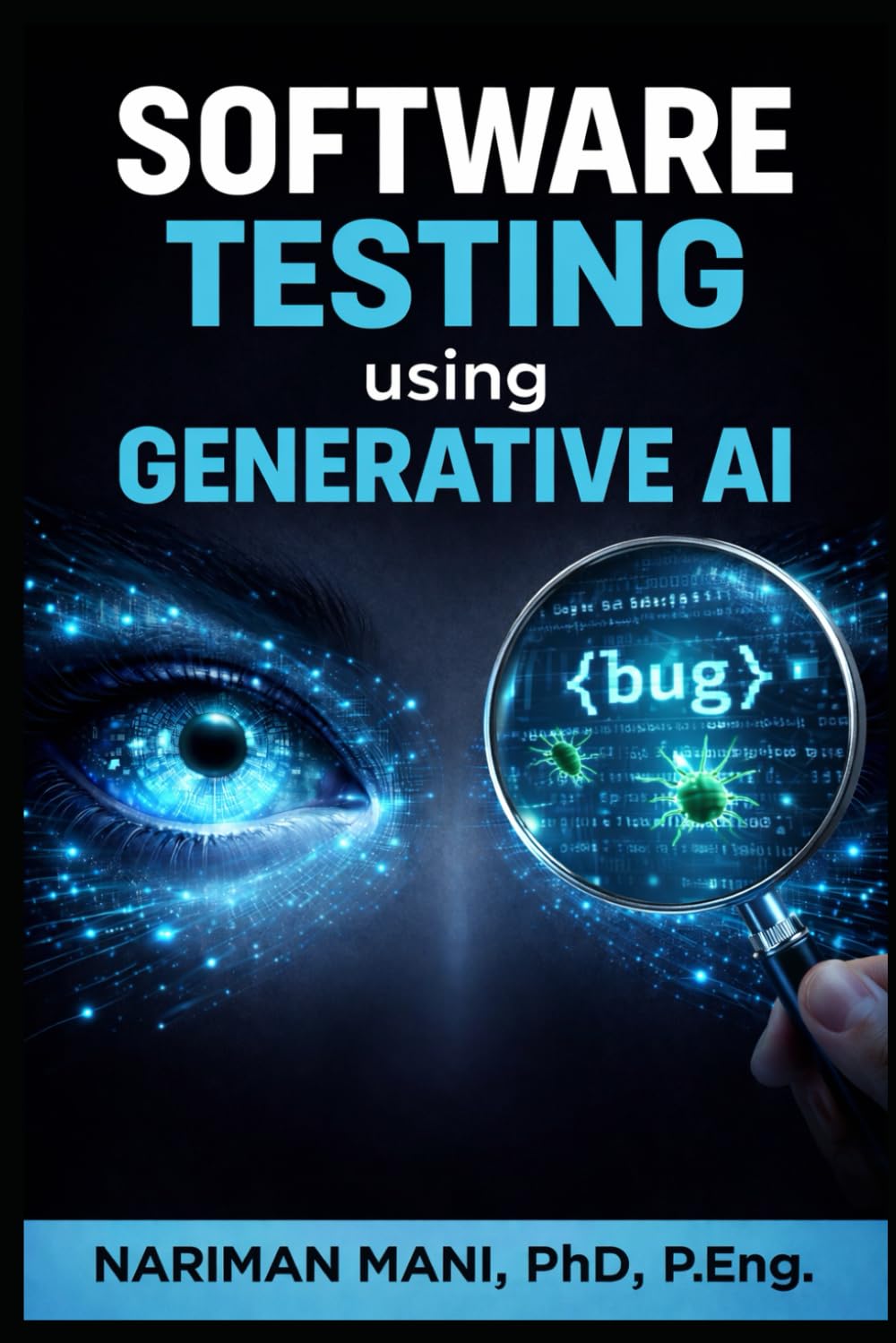
Software Testing with Generative AI Front cover

Software Testing with Generative AI

Engineering Reliable Quality Systems in the Age of Probabilistic Software

Instructional overview

This book is also a teaching resource: it is written to help students and professionals reason from first principles about AI-enabled quality, uncertainty, and engineering responsibility.

Software testing is entering a new era.

Generative AI is no longer a futuristic experiment—it is already shaping how test cases are created, how risks are analyzed, how failures are diagnosed, and how quality decisions are made. Yet most existing guidance treats generative AI as a productivity shortcut or a tool to "speed things up," without addressing the deeper engineering implications.

In an academic setting, I would use this text to support modules on AI testing, software quality governance, risk-based thinking, and the shift from deterministic to probabilistic systems.

This book takes a different approach.

Testing with Generative AI is a rigorous, engineering-focused exploration of how generative models fundamentally change the nature of software testing—and what professionals must do to use them responsibly, safely, and effectively.

Rather than focusing on tools, certifications, or surface-level techniques, this book treats generative AI as a probabilistic software system that must be architected, constrained, validated, and governed with the same discipline applied to production systems.

Probabilistic systems demand stronger engineering discipline, not weaker standards.

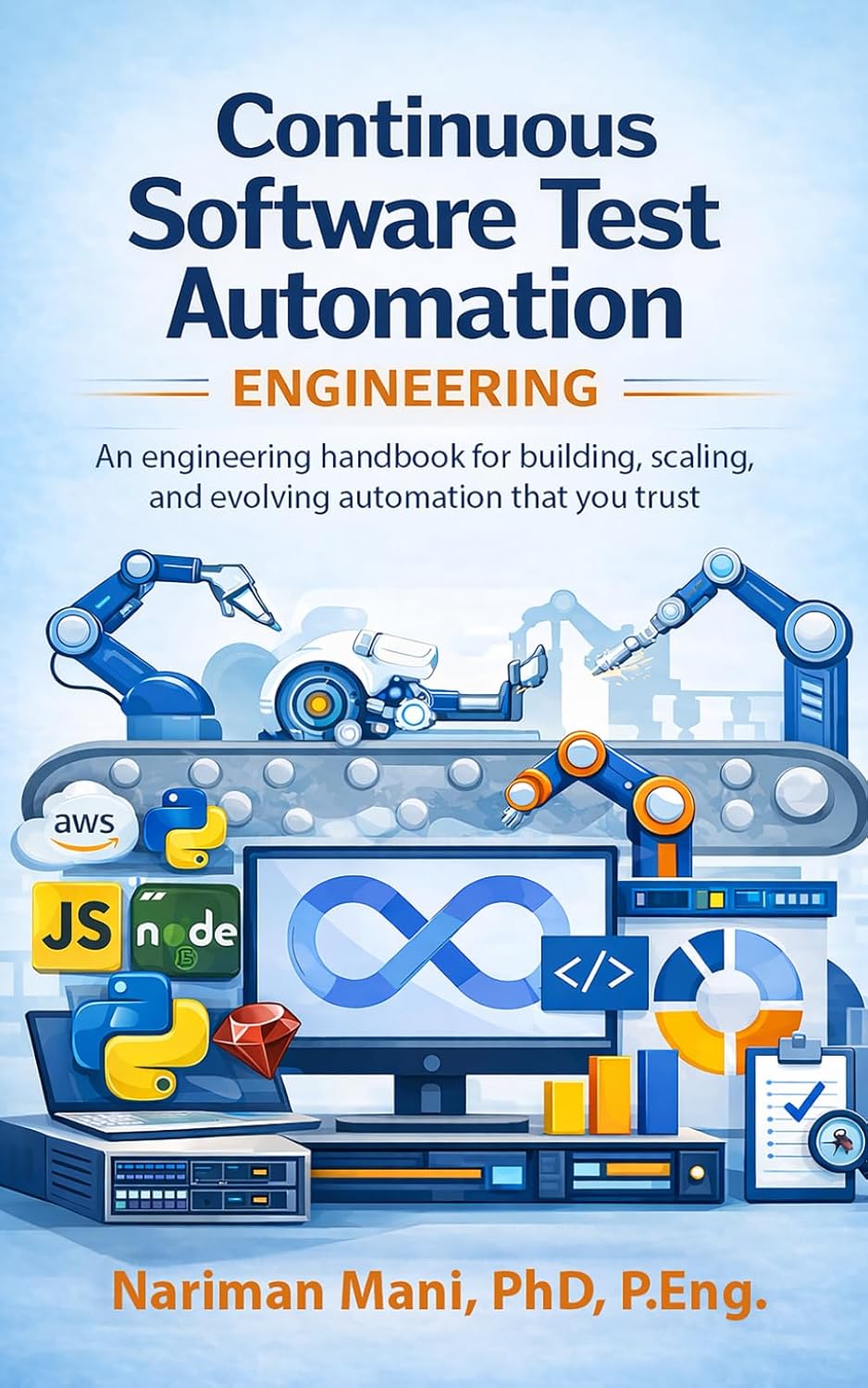
Continuous Test Automation Engineering Front cover

Continuous Test Automation Engineering

An engineering handbook for building, scaling, and evolving automation that you trust.

Instructional overview

Designing, Operating, and Evolving Test Automation in Modern Delivery Pipelines

This book is designed as both an engineering handbook and a teaching artifact for test automation courses, SDET training, and software quality seminars.

This book is about treating test automation as a continuous engineering discipline, not a one-time implementation.

It focuses on how you design, integrate, operate, and evolve test automation within fast-moving software delivery environments.

Teaching value

The book can anchor classroom discussions on automation architecture, maintainability, CI/CD quality gates, metrics, flaky tests, and engineering trade-offs. It gives learners a structured vocabulary for explaining why automation succeeds or fails in real organizations.

What this book covers
  • How you engineer test automation as a system, not a collection of scripts
  • How test automation fits into CI/CD pipelines as a quality gate, not a bottleneck
  • How architecture decisions impact scalability, reliability, and maintainability
  • How to manage risk, flakiness, and technical debt in automated tests
  • How to use metrics and reporting to build trust with stakeholders
  • How to continuously improve automation as the system under test evolves
What makes this book different
  • It assumes you already know how to write automated tests
  • It focuses on engineering decisions, not tool tutorials
  • It addresses real-world constraints:
  • changing architectures
  • unstable environments
  • incomplete requirements
  • organizational pressure for speed
  • You learn how to adapt automation over time, without constantly rewriting it.
Who this book is for
  • Test Automation Engineers and SDETs
  • Test Architects and Quality Engineers
  • Senior Developers responsible for pipeline quality
  • Technical leaders designing delivery platforms
  • If you are responsible for keeping automation valuable month after month, this book is written for you.
Core idea

Test automation is never “done.”

Systems change. Pipelines change. Teams change.

Your automation must continuously evolve—by design, not by accident.

This book shows you how to engineer for that reality.

2026 All rights reserved.